
The first thing to establish is which noise you actually have, because they mean very different things.
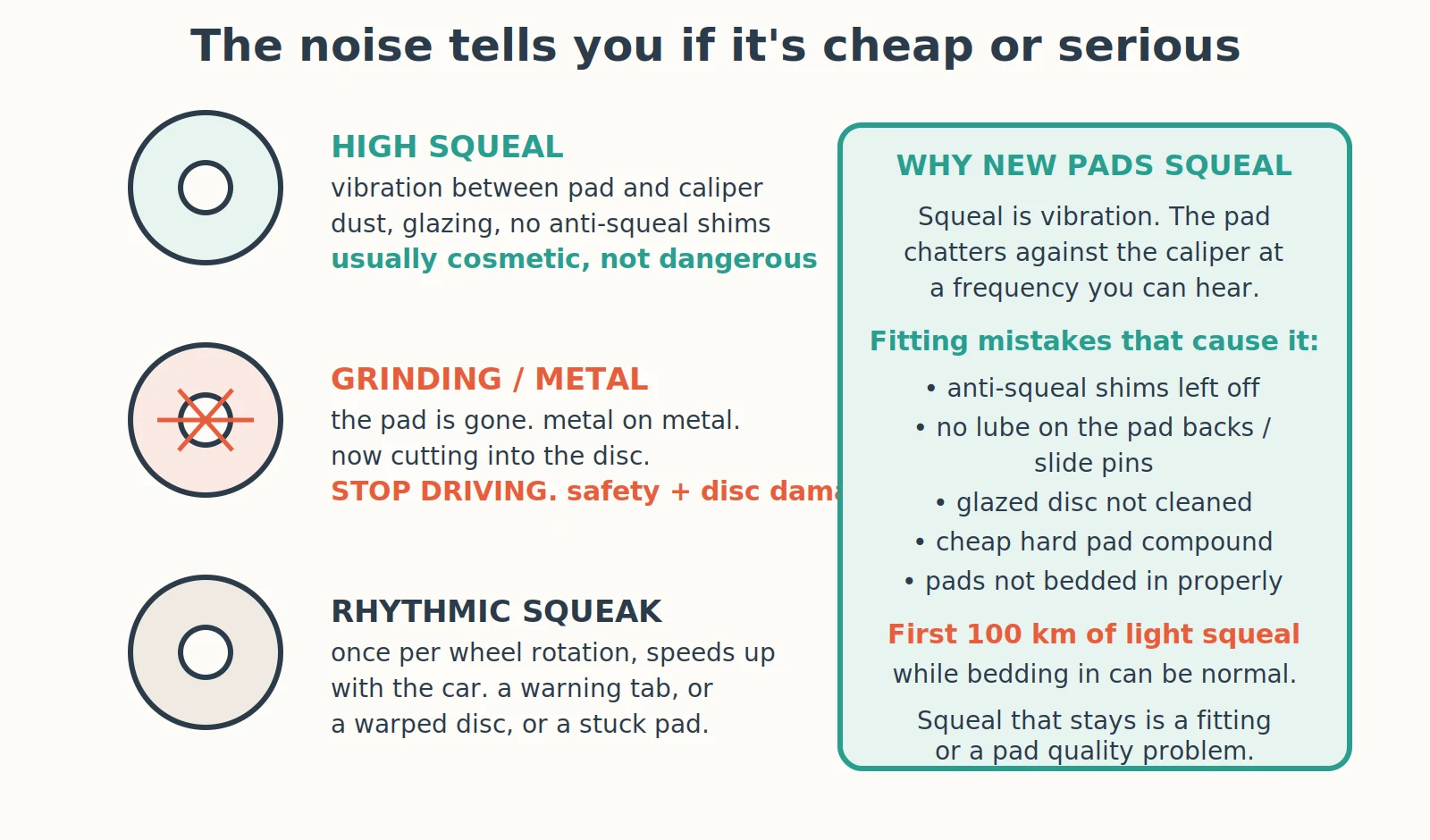
Squeal is usually cosmetic. Grinding means the pad is gone. A rhythmic squeak once per wheel turn is a third thing.
What actually causes brake squeal?
Squeal is vibration. The pad vibrates against the caliper and the disc at a frequency high enough to hear. Anything that lets the pad move or resonate when it should be held firmly can start it.
That is why the fix is rarely the pad itself and usually the way it was installed. The pad needs to be damped, held tight, and free to slide smoothly without rattling. Get any of those wrong and it sings.
What fitting mistakes cause new pads to squeal?
Anti-squeal shims left off. Many pads come with shims or backing plates that damp vibration, and if the old ones were not transferred or new ones fitted, the pad can resonate.
No lubricant where it belongs. A thin film of brake grease on the pad backing plates and on the caliper slide pins stops vibration and lets the caliper move freely. Grease never goes on the friction surface, only on the backs and the contact points.
A glazed or scored disc reused without cleaning or skimming. New pads bedding onto an old shiny disc surface can squeal until they mate.
Seized or sticky slide pins. If the caliper cannot slide freely, the pad is dragged and held at an angle, which causes both noise and uneven wear.
And bedding in. New pads and discs need a proper bedding-in procedure, a series of moderate stops to transfer an even layer of friction material. Skip it and you can get uneven deposits that cause both squeal and juddering.
Do cheap brake pads squeal more?
Often, yes, and it comes down to the friction compound. Harder, cheaper compounds are more prone to squeal and can be harder on the discs. They also tend to produce more brake dust.
This is a place where the pad quality genuinely matters, not just for noise but for braking performance and disc life. A slightly better pad that is quiet, kind to the disc and stops well is usually worth the difference. The cheapest pad that squeals and eats discs is a false economy.
That said, even a good pad will squeal if it is fitted without shims and lube. Quality and fitting both matter.
When is brake noise actually dangerous?
Grinding or a metallic scraping sound is the serious one. It usually means the friction material is completely worn away and the metal backing plate is now grinding on the disc. That is both a safety problem, because braking is compromised, and a cost problem, because it destroys the disc.
A rhythmic squeak or scrape that happens once per wheel rotation and speeds up with the car can be a wear indicator tab doing its job, a warped disc, or a sticking pad. Worth investigating soon.
Light squeal from new pads at low speed, especially when cold or damp, with braking performance completely normal, is usually cosmetic. Annoying, not dangerous. But it is worth fixing properly because it often points at a fitting detail that also affects wear.
Why do my brakes squeal only in the morning or when damp?
A light surface layer of rust forms on the discs overnight, particularly in damp or humid climates. The first few stops scrape it off and can squeal or make a light grinding sound while they do. If it clears after the first few brake applications and does not come back until the car has sat again, that is normal and not a fault.
If it persists after the discs are clean and warm, then it is back to fitting, pad compound or a mechanical cause.
Common questions
How long should new brakes squeal before I worry? A little squeal during the first hundred kilometres while bedding in can be normal. If it is still squealing after that, something needs looking at.
Can I put grease on the brakes to stop the squeal? Only on the backs of the pads and the slide pins, using proper brake grease. Never on the friction surface or the disc, which would be dangerous.
Do I need new discs with new pads? Not always, but new pads on worn, glazed or scored discs are a common cause of noise and poor bedding. If the discs are near their wear limit or badly glazed, replacing them is the better job.
Why do my brakes squeal but the pads still look thick? Because squeal is a vibration problem, not a wear problem. New, thick pads squeal all the time when the shims, lube or bedding-in were missed.
Should the front and rear be done together? Not necessarily. Fronts usually wear faster and can be done on their own. But check the rears while the car is up, because a seized rear caliper is common and gives noise too.
Need brake parts?
I supply brake discs, pads, calipers, wheel hubs and ABS sensors out of China. Matched to your VIN, with the fitting hardware, with warranty. Small or mixed orders welcome. Send me the VIN on WhatsApp and I will price it the same day.