
What the sensor's actually doing
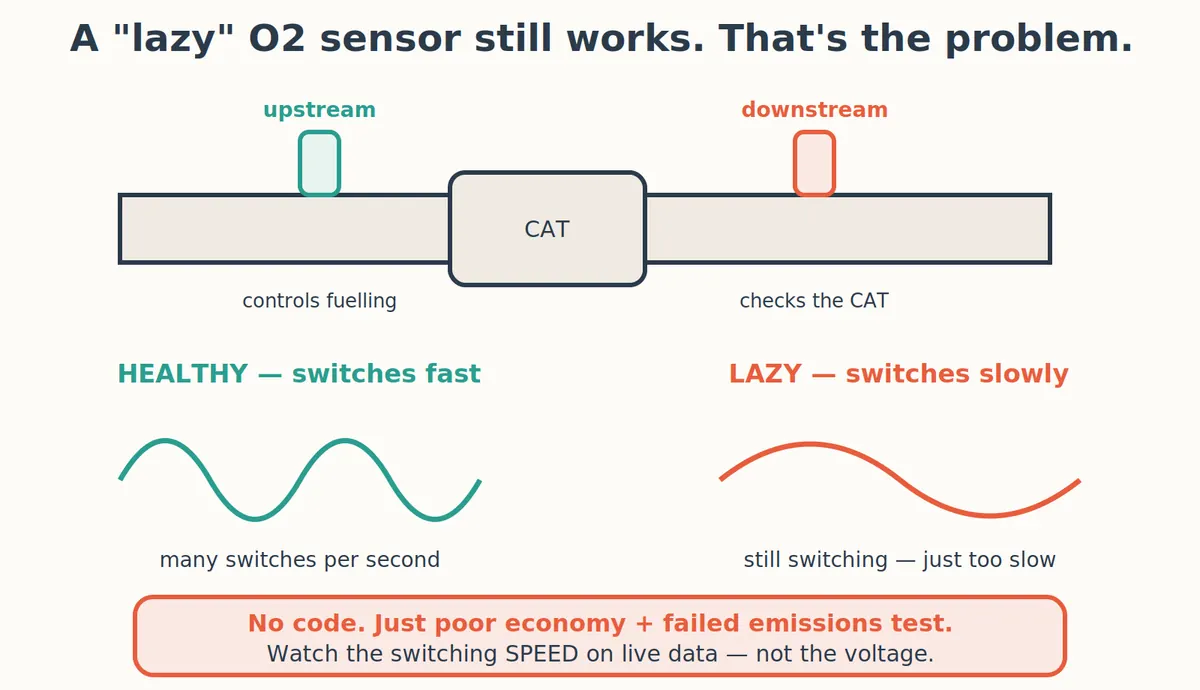
The one before the cat — the upstream sensor — sniffs the oxygen in the exhaust so the computer can fine-tune the fuel mix on the fly. A good one flips between rich and lean many times a second. That constant flickering back and forth is the sound of the engine getting it right.
The one after the cat has a totally different job — it's just checking the catalytic converter is doing its work, so it sits fairly steady. Two sensors, two jobs, two different part numbers. Worth remembering when you order.
I confirm upstream or downstream position, bank, connector, cable length, heater specification and OE number. That position check is done before I discuss testing, warranty or shipment.
OE / VIN · FITMENT · TEST · WARRANTYA good sensor flips fast. A lazy one still flips — just too slowly to keep the fuelling honest.
What makes one go lazy
Age and gunk. The ceramic tip gets coated over the years — combustion crud, a bit of oil, silicone from someone using the wrong sealant, fuel additives. It still makes a signal, just slower. A slow signal can make fuel correction lag behind changing conditions — a touch rich, then a touch lean, never quite nailing it.
What you get out of that: worse fuel economy, a failed emissions test, a cat working harder than it should, and — this is the trap — often no fault code at all. Because technically the sensor is still answering. It's just answering slowly, and slow doesn't trip a code.
How to actually catch it
Here's the line that separates you from the parts-cannon guys: watch the switching speed on live data, not the voltage. A healthy upstream sensor snaps between rich and lean. A lazy one takes its sweet time. The voltage looks fine on both — it's the speed that gives it away.
And mind this trap: a slow upstream sensor eventually throws a cat efficiency code, and someone quotes an unnecessary catalytic-converter replacement. The cat might be perfectly fine. Check the sensor's response time before anyone condemns something expensive.
Front or rear — it matters a lot
This is where orders go wrong. The two sensors can look almost identical, but they're calibrated differently and they've got different part numbers. Put the wrong one in the wrong spot and the light stays on while the workshop pulls the car apart looking for a ghost. So I do not approve an order that only says "oxygen sensor for a BMW." Ask which position, or get the VIN.
What to look for when you buy
The ceramic element and the little heater inside it are the whole product. untested copies use rubbish ceramic that goes lazy in months — which lands you right back where the customer started, except now it's your part in the exhaust. Check the connector plastic and cable are properly heat-rated, and buy from someone who tests them.
What I check before shipment
I confirm upstream or downstream position, bank, connector, cable length, heater specification and OE number. That position check is done before I discuss testing, warranty or shipment.
Diagnosis and safety note
This guide describes common failure patterns, not a final diagnosis. Confirm fault codes, live data, wiring, fitment and the vehicle-specific service information before ordering or fitting a part. Safety-critical, refrigerant, high-pressure and drivetrain work should be handled by a qualified technician using the correct procedures.
Frequently asked questions
Can you clean an O2 sensor? Not really. The contamination is baked into the ceramic, not sitting on top of it. Cleaning just delays buying the right part.
Should you replace both sensors together? It depends on mileage, diagnosis, position and workshop preference — same age, same exhaust, the second won't be far behind. But confirm the position and part number for each.
Cat code came back after a new sensor — why? Either the cat's genuinely cooked (often from years of running on a lazy sensor), or the new sensor is also slow. Which is exactly why buying a tested one matters here.
Need oxygen and exhaust sensors?
I supply oxygen sensors, NOx sensors, MAF sensors and engine electronics out of China — position confirmed, tested, matched to your VIN, with warranty. Small or mixed orders are fine and they are easy to consolidate with a mixed order. Send me the part number, or the VIN and which position, on WhatsApp and I will confirm fitment, testing, warranty and shipping options before you order.